Beet Harvest Bonanza: A Rootin’-Tootin’ Day on the Homestead!

Updated: Aug 20, 2025
Hey there, green thumbs and animal lovers! Dale here, back with another slice of life from Dale’s Quails Homestead. We’re diving into the heart of beet harvest season! We teased corn in our last post, but homesteading’s all about rolling with the punches, and today, it’s all about beets! Our beet bed was ready to shine, and with fall carrots itching to take over, we pivoted to harvest these ruby-red gems. Join us for a fun, fact-packed dive into how we turn one bed into a year’s worth of beets—plus, tips to make your own harvest a breeze!

Before we jump into the harvest excitement, let's take a step back in time to last fall, when we set the stage for this bountiful beet bed. Prepping in advance is key to healthy roots and happy plants, and it's a simple process that pays off big time come summer.
Setting Up for Success: Prepping the Beet Bed
Last autumn, as the leaves started turning, we got to work on our beet bed prep. We start by spreading a generous layer of our homemade compost—rich from kitchen scraps, animal bedding, and garden waste—right over the soil. This adds essential organic matter, improving structure and fertility without overwhelming the bed. Then, we top it all off with a thick blanket of straw mulch to cover the bed through winter. This straw shield protects the soil from erosion, suppresses early weeds, and helps retain moisture as the ground freezes and thaws.
Why this fall routine? Beets thrive in loose, well-draining soil that's neutral to slightly alkaline, with a pH between 6.5 and 7.0—too acidic, and they struggle to absorb nutrients, leading to stunted growth. They prefer soil high in potassium for robust root development, which helps produce those sweet, plump beets we love. Phosphorus supports overall health, but nitrogen should be moderate; too much nitrogen encourages lush greens at the expense of the roots, resulting in big tops and tiny beets that lack flavor and size. Beets are also sensitive to boron levels—a micronutrient often found in compost; deficiency can cause black heart, where the roots develop dark, corky spots inside, making them unappetizing. By amending with compost in fall, we let it break down naturally over winter, creating a balanced, nutrient-rich environment by spring planting time. (Imagine a photo here: our beet bed in fall, freshly composted and mulched with golden straw, ready to hibernate under a light snow dusting!)
Come spring, we gently rake back the straw (which by then has partially decomposed into more mulch), and direct-sow our beet seeds in rows. This prep sets us up for success, minimizing work later and maximizing yield.
Why Beets Now?
Our high-density planting worked its magic this season. We harvested the big beets earlier—they were plenty plump—but gave the smaller ones two extra weeks to catch up. Now, with a break in 90+ degree days and the soil softened by recent rains, it’s the perfect time to rework the bed for fall carrots. This one bed, about 36 square feet, produces roughly 75 pounds of beets annually—enough to keep our family stocked with vibrant, earthy goodness all year long!

Harvesting Like Homestead Pros
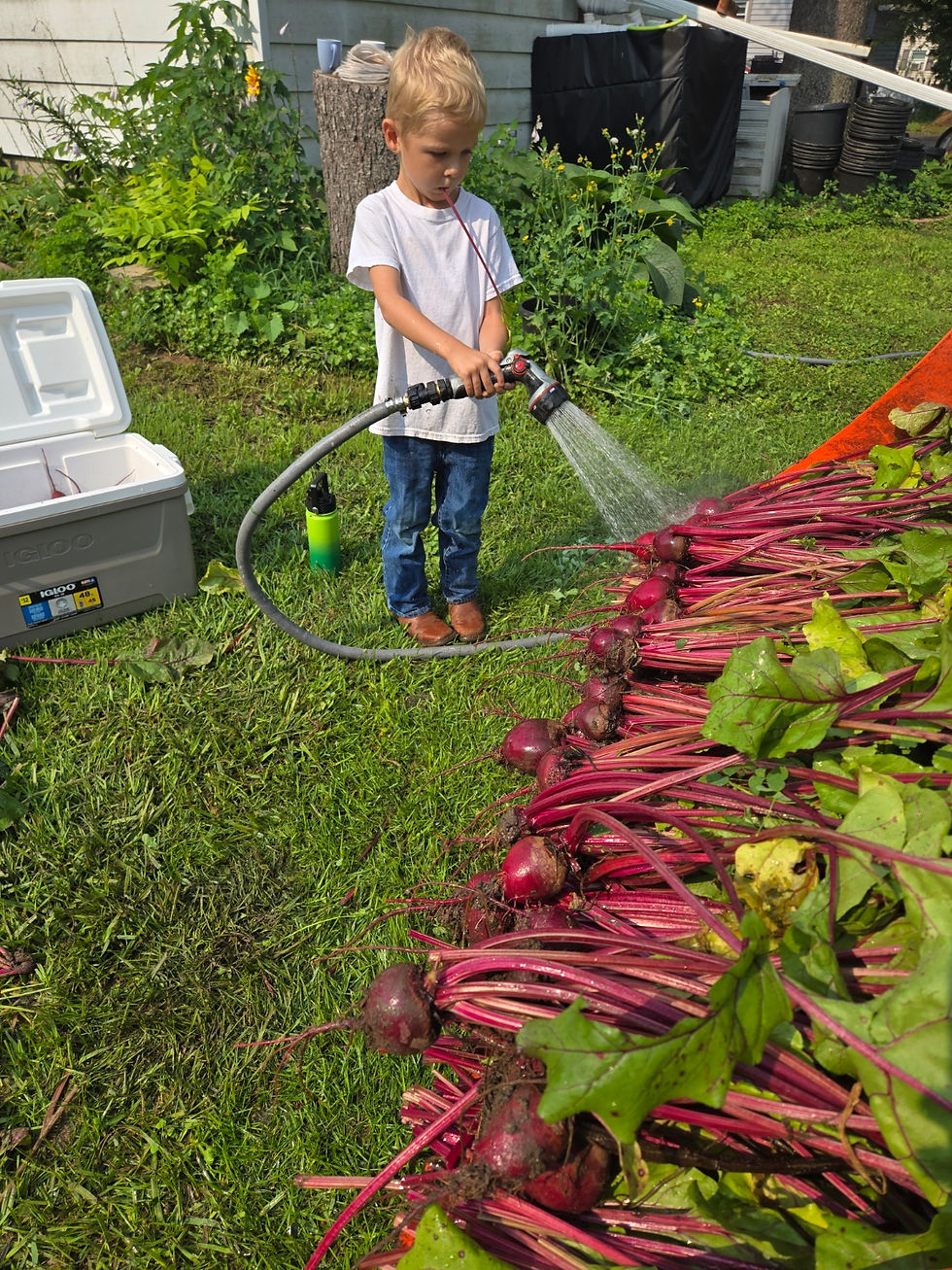
Picture this: a sunny morning, a trusty tractor bucket, and our secret weapon—a high-energy 5-year-old helper! We pull every beet from the bed, lining up those bigger than my thumb neatly across the bucket’s edge for efficiency (a homesteading must). Here’s how we do it:
Pull and Sort: We gently tug beets from the soil, shaking off excess dirt, and lay them out across the tractor bucket to keep things organized. This step helps us see what we’re working with before moving forward.
Wash and Trim: Using cold running water, we rinse the beets clean to remove remaining dirt. Only then do we trim, leaving an inch or two of greens attached—why? This prevents the beets from “bleeding” their vibrant color and keeps them fresh longer by slowing moisture loss. After trimming, the beets go into a cooler filled with cold water to stay crisp until evening processing. Pro tip: snack on a few fresh greens straight from the garden—nothing beats that earthy, slightly sweet crunch!
Stay Organized: A tractor bucket or sturdy table keeps everything tidy, speeding up the process. Efficiency is key when you’re juggling animals, kids, and a bustling homestead.
Our first harvest this season yielded just over 55 pounds, and this final pull brought in nearly 25 pounds—hitting our 75-pound goal right on the nose! (Catch a snapshot here: our little helper beaming with a armful of freshly pulled beets, dirt-streaked but all smiles against the green garden backdrop.)
Beets: From Garden to Pantry
Beets are a homestead superstar—versatile, nutritious, and easy to preserve. For first-timers dipping into food preservation, don't worry; we'll break it down step by step with simple, safe methods to turn your harvest into pantry staples. Always use clean equipment, follow reliable recipes (like those from the USDA or Ball Canning guides), and remember: safety first—especially with pressure canning to avoid botulism risks. Here’s how we stretch this harvest to last all year, explained in detail for beginners:
Pressure Canning: This method uses high heat and pressure to safely preserve low-acid foods like beets in jars that last up to a year or more on the shelf. Why pressure can? It kills bacteria that boiling water alone can't. Step-by-step for newbies: Start by washing and trimming your beets, leaving about an inch of stem and root to prevent bleeding. Boil them whole until the skins slip off easily (about 25-30 minutes, depending on size). Peel, then slice or cube into uniform pieces for even processing. Pack into sterilized jars, leaving 1-inch headspace, and cover with hot water or a light brine (1 tsp salt per quart if desired). Wipe jar rims, apply lids and bands finger-tight. Process in a pressure canner at 10-15 PSI (adjust for your altitude—check a guide) for 30 minutes for pints or 35 for quarts. Let jars cool undisturbed, then check seals. These are great for warming up as side dishes, adding to soups, or mixing into salads for a quick, colorful boost.
Blanching and Freezing: A beginner-friendly way to preserve beets without special equipment—just your freezer! Why blanch? It stops enzymes that cause loss of flavor, color, and texture over time. How to do it: Wash and trim beets, then boil whole until tender (25-50 minutes based on size). Cool in ice water, peel, and slice or dice. Blanch slices in boiling water for 2-3 minutes, then immediately plunge into ice water to stop cooking. Drain well, pat dry, and spread on a baking sheet to flash-freeze individually (prevents clumping). Transfer to freezer bags or containers, label with the date, and store for up to 8-12 months. Use them straight from frozen in roasts, smoothies, or baked goods—they retain that fresh-picked taste and nutrients like folate and antioxidants.
Dehydrating: Turn beets into lightweight, space-saving snacks or ingredients that store for months in a cool, dry place. Basics for starters: You'll need a dehydrator or oven set to low (around 125°F). Wash, peel (optional, but skins can be tough), and slice beets thinly (1/8-inch) for even drying—use a mandoline for safety and uniformity. Arrange slices in a single layer, not touching, and dehydrate for 8-12 hours until crisp and leathery (no moisture when bent). Cool completely, then store in airtight jars. Rehydrate in water for cooking, or grind dried slices into powder for adding natural color and earthiness to smoothies, baked goods, or as a beetroot latte mix. Pro tip: Season slices with salt or herbs before drying for tasty chips!
Pickling: Our favorite for adding zing—pickled beets are tangy, crunchy, and ready in weeks. Water-bath canning for safety: This works for high-acid foods like pickles. Easy steps: Cook beets until tender, peel, and slice. In a pot, combine vinegar (at least 5% acidity), water, sugar, and spices (like cinnamon, cloves, or dill) to make a brine—boil and simmer for flavor. Pack beets into sterilized jars, pour hot brine over, leaving 1/2-inch headspace. Remove air bubbles, wipe rims, and seal. Process in a boiling water bath for 10-15 minutes (adjust for altitude). Cool and store; wait 2-4 weeks for flavors to meld. These shine in salads, on charcuterie boards, or as a snack.
Fermenting: For a probiotic-packed twist, fermenting beets creates tangy, gut-friendly treats like beet kvass or fermented slices—no heat required, just time and beneficial bacteria. Why ferment? It boosts digestibility and adds live cultures for health benefits, similar to sauerkraut. Beginner basics: Use raw beets for best results—wash, peel, and dice or grate them. Pack into a clean jar with 2-3% salt by weight (about 1-2 tsp per pound of beets) and any spices like garlic or ginger. Mash to release juices, or add a brine (2 tbsp salt per quart of water) to cover. Weigh down to keep submerged, cover loosely, and let sit at room temperature (65-75°F) for 5-14 days, burping daily to release gases. Taste test for tanginess, then refrigerate to slow fermentation. Store in the fridge for months. Enjoy as a side, in salads, or sip kvass as a tonic—it's loaded with vitamins and natural probiotics from the lactic acid bacteria that develop during the process.
The greens don’t go to waste either! The best ones get dehydrated into powder for soups and broths, adding a nutrient-packed punch (rich in vitamins A and K). The less-than-perfect greens? They’re a feast for our rabbits, chickens, turkeys, and goats. Anything left heads to the compost pile—beet greens are high in nitrogen, helping create rich, fertile compost to feed next season’s crops. (Visualize this: jars of pickled beets glowing ruby on the pantry shelf, next to bags of frozen slices and dehydrated chips—homestead bounty at its finest!)

Tips for Your Beet Bonanza
Want to rock your own beet harvest? Here’s the lowdown:
Get a Helper: A kiddo with energy to spare makes harvesting fun and fast. Bonus: they learn where food comes from!
Use Cold Water: Keep beets crisp by soaking them in a cooler of cold water post-harvest.
Stay Neat: Organize your workspace—a bucket, table, or crate keeps things moving smoothly.
Save the Greens: Don’t toss those tops! Dehydrate, feed to animals, or compost for soil magic.
Prep in Fall: Follow our lead—amend with compost and mulch with straw for winter-ready beds that burst with life in spring.
Why We Love Beet Day
Beet harvest day is more than just pulling roots—it’s a family affair filled with laughter, learning, and the pride of knowing we’re set for the year. From the crunch of fresh greens to the satisfaction of a stocked pantry, it’s a reminder of why we homestead. Plus, watching our kids dig in (literally) and our animals munch happily on greens? That’s the good stuff.

Got a beet story or preservation tip? Drop it in the comments—I’d love to hear how you’re rooting around in your homestead! Subscribe for more tips and grab our free high-density gardening guide below. Next up, we’ll dive into corn (promise!) and share how we turn golden kernels into homestead gold.
Cheers,Dale
P.S. Check out our shop for quail kits and gear to kickstart your homestead adventure!


Comments